Complaints Management: Turning Negative Feedback into Audit Evidence
A provider with no complaints isn't a provider with no problems — it's a provider whose participants don't feel safe raising concerns. Auditors know this.
The Practice Standards expect
- A complaints process accessible to every participant
- Information about how to complain provided in formats they can engage with
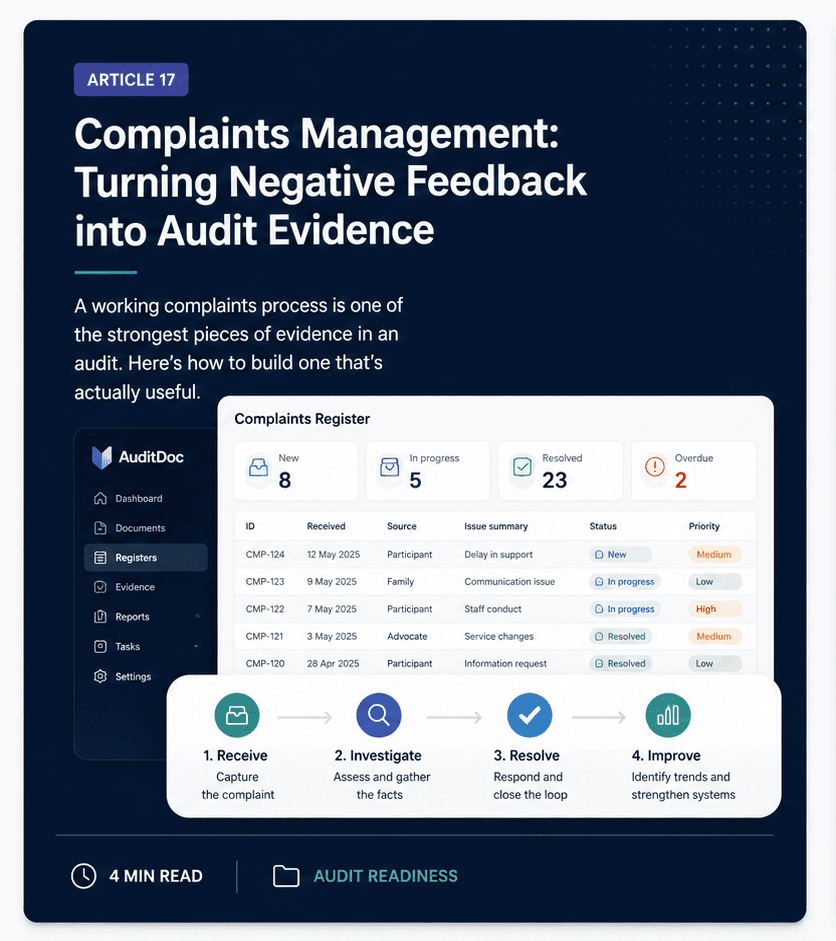
- A process for receiving, acknowledging, investigating, and resolving complaints
- Information about the right to complain to the NDIS Commission
- A register tracking all complaints and outcomes
- Trend analysis feeding into continuous improvement
For each complaint capture
Date received, source, description, acknowledgement date, investigation summary, outcome, date resolved, any improvements made.
Tell participants about the Commission
They have the right to complain directly to the Commission, and telling them so will not affect their supports. If your only complaints information is a paragraph in a service agreement, that's not accessible — that's the most common finding.
Close the loop with the participant
The complaint isn't closed when you've made an internal decision. It's closed when the participant has been told the outcome and had the chance to respond.
A live complaints register with regular entries and demonstrable improvements is one of the strongest things an auditor can see.