Top 5 Reasons Providers Fail Audits (and How to Avoid Them)
Most audit failures aren't dramatic. They're the result of evidence that exists in your business but isn't organised in a way the auditor can use.
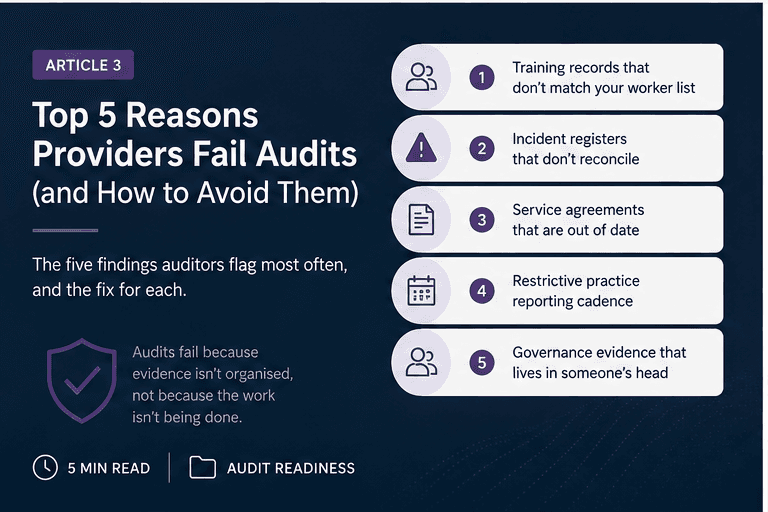
1. Training records that don't match your worker list
You have a training matrix and a list of workers, but the two don't reconcile. Workers without current First Aid or expired mandatory reporting training get flagged.
Fix: Keep one source of truth. Review monthly, not annually.
2. Incident registers that don't reconcile
The auditor cross-checks your internal incident register against your submissions in the NDIS Commission Portal. Mismatches are findings.
Fix: Every incident goes in the same register, with reportable ones flagged and linked to the portal submission.
3. Service agreements that are out of date
Old agreements, unsigned agreements, or agreements that don't reflect current rates.
Fix: Treat service agreements as living documents. Every plan review triggers a service agreement check.
4. Restrictive practice reporting cadence
Missing months, or restrictive practices in use without a current behaviour support plan authorising them.
Fix: Calendar monthly reporting. Every restrictive practice has a current plan.
5. Governance evidence that lives in someone's head
Meetings happen, decisions get made, but nothing's written down.
Fix: Every governance meeting has an agenda, minutes, attendees, and decisions recorded.
The common thread: audits fail because evidence isn't organised, not because the work isn't being done.