Service Agreements: 7 Clauses Most Providers Miss
The Practice Standards require participants to clearly understand the supports they have chosen and how they'll be provided. In practice that means a written service agreement.
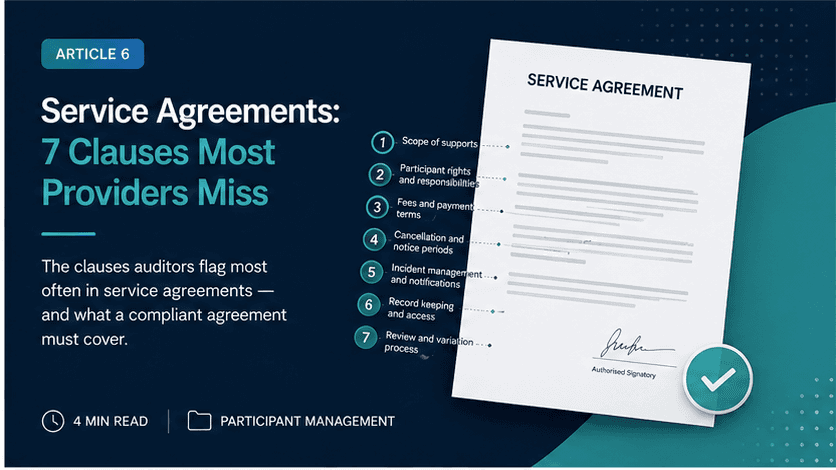
Most agreements are 80% there. These are the 7 clauses most often missing:
1. Plan period and review trigger
Name the participant's NDIS plan period and what will trigger an agreement review.
2. Itemised supports
Support category, line item, hourly rate, frequency, estimated total. "Weekly cleaning" isn't enough.
3. Cancellation terms aligned to NDIS Pricing Arrangements
Don't write terms that contradict the official pricing rules.
4. Complaints and feedback
How to complain to you, that they can also complain to the NDIS Commission, and that complaining won't affect their supports.
5. Privacy and information handling
How you handle their information, who has access, how long you keep records.
6. Variation and termination
How either party can change or end the agreement. No clauses restricting the participant's right to choose another provider.
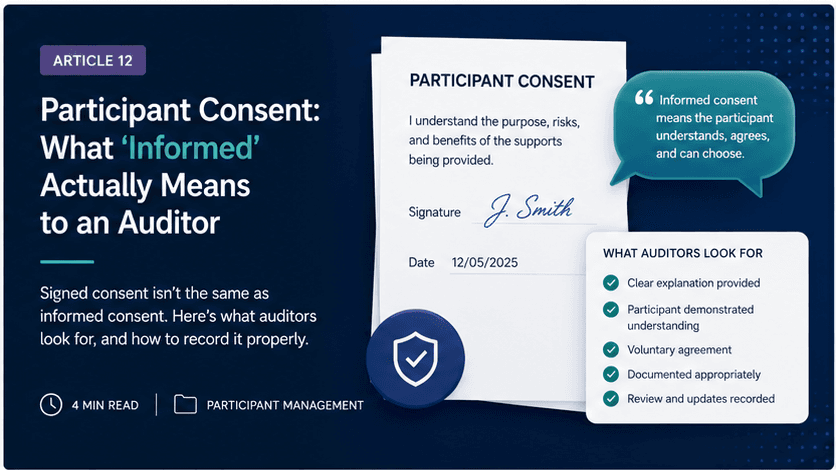
7. Consent and signatures
Signed by participant or nominee, with a date. If they can't sign, record the alternative form of consent.
Auditors will pull a sample of participants and check each of the 7 items. Weak agreements across multiple participants is a finding even if your other compliance is strong.