Participant Consent: What 'Informed' Actually Means to an Auditor
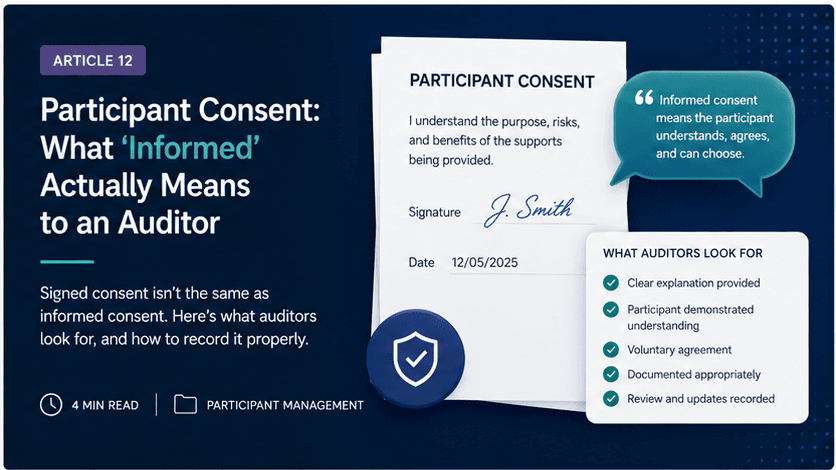
A signature isn't consent. Consent is the participant's free, informed agreement to a specific support, decision, or use of information. The signature is one piece of evidence. The conversation that led to it is the rest.
For consent to be informed, the participant needs to understand
- What is being proposed
- Why it is being proposed
- What the alternatives are (including declining)
- What the consequences of declining are
- That they can change their mind, and how
Where auditors check for consent
- Service agreements
- Significant changes in supports
- Behaviour support plans (including any restrictive practices)
- Sharing information with other providers, the NDIA, or the Commission
- Photos or video
- Decisions about money and property
Capacity and nominees
If the participant can't give informed consent themselves, you need to identify the right substitute decision-maker — guardian, nominee, or formally appointed representative. Don't assume a family member's signature is sufficient.
Practical consent record
For each consent event, capture: the decision, date and location, who was present, the format and language used, a short note of what was discussed, the participant's response, and the signature (or alternative consent record).
This isn't bureaucratic theatre. It's the audit trail that protects the participant, the worker, and the provider.